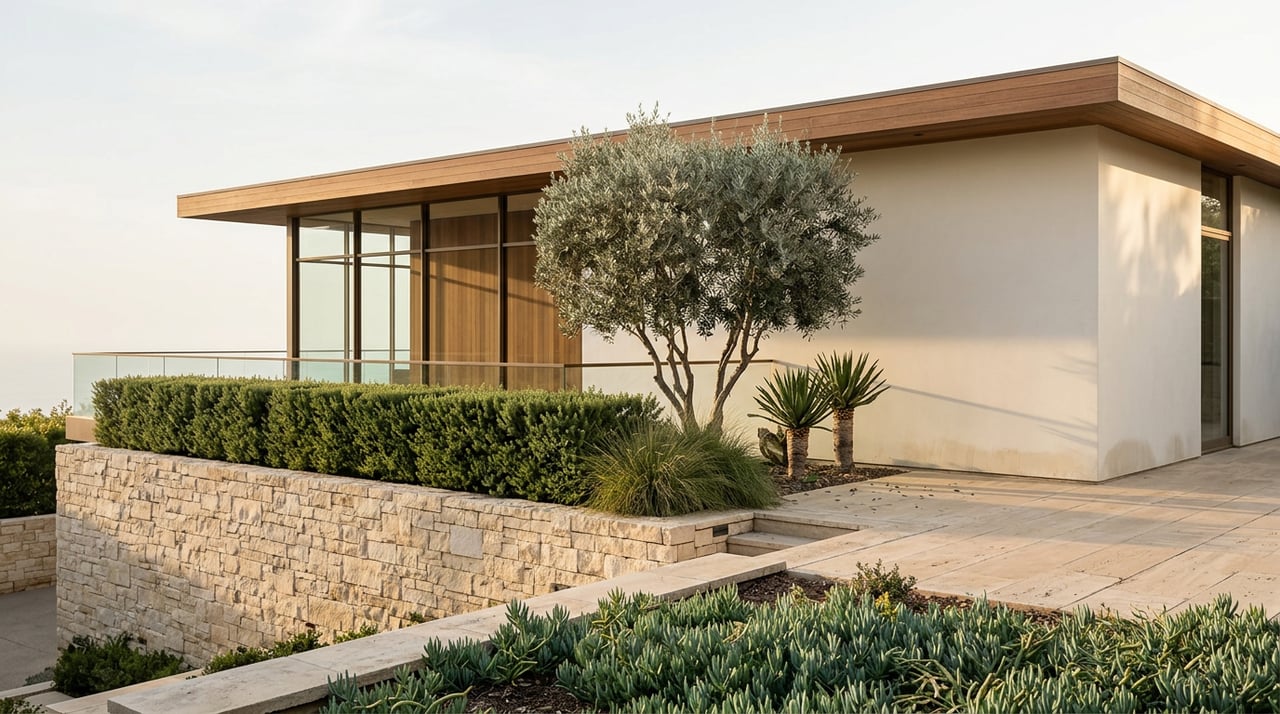
In June 2026, a home in Cameo Shores went on the market for $5,995,000. The house itself was original, meaning nobody had touched it since the neighborhood's first wave of construction in the 1960s. Four days later it sold for $8.7 million, nearly $3 million over asking, to a buyer who will almost certainly tear it down.
That sale tells you almost nothing about what a Corona del Mar home costs and almost everything about how this market actually prices property. The buyer was not paying for square footage, kitchen finishes, or even the view from the existing windows. They were paying for the right to build something worth more than $20 million on a lot where new construction of that scale rarely comes available. In Cameo Shores, the house is often a placeholder. The land underneath it is the product.
Three Markets, One Zip Code
Ask three different real estate professionals for the median home price in Corona del Mar this year and you will likely get three different numbers, ranging from roughly $4.3 million to more than $7 million depending on how each one weights the sales they are counting. That spread is not a data error. It is the honest result of combining three sub-markets that barely resemble each other.
The Village and Flower Streets, the walkable grid of cottage-lined blocks between Pacific Coast Highway and the bluff, trade largely in the $2.4 million to $9.5 million range depending on lot size and whether the home has been rebuilt. Irvine Terrace and the Harbor View Hills pockets, sitting on flatter, larger lots with single-story height restrictions that protect harbor and Catalina Island sightlines, occupy a different band entirely. Cameo Shores and neighboring Cameo Highlands, the gated bluff-top enclave on the ocean side of PCH, run from roughly $12 million into the mid-$30 millions for oceanfront estates.
Blend those three markets into one median and the number you get describes none of them accurately. It is a blended median drawn from neighborhoods that do not compete with each other for the same buyer.
What the Teardown Sale Actually Priced
Cameo Shores is a small, specific place: roughly 170 homes on the ocean side of Pacific Coast Highway, developed as a custom subdivision in the late 1950s and early 1960s by individual builders rather than a single developer working from repeated floor plans. That history is why homes there vary so much from one lot to the next, and why so few of them change hands in a given year.
The neighborhood's defining amenity is access most CdM residents do not have. Homeowners in Cameo Shores and Cameo Highlands hold keycard entry to private beach coves, reached in part through a pedestrian tunnel that runs underneath PCH, along with trails connecting toward Pelican Hill and Crystal Cove. That access does not extend to the rest of Corona del Mar. It belongs to specific streets, tied to specific HOA dues, and it is one of the reasons buyers here are willing to pay premiums that look irrational until you understand what they are actually buying.
The June 2026 sale is the clearest illustration of the underlying math. A finished custom home in Cameo Shores can be worth more than $20 million once built. If the land and its rebuild rights are worth that much, a buyer can justify paying $8.7 million for a dated structure they intend to demolish, because the real transaction is the entitlement to build on one of a limited number of ocean-side lots, not the four walls currently standing there. Properties in this pocket trade infrequently, and when they do, the price reflects both scarcity and replacement value more than it reflects the condition of what is being sold.
The Village Isn't as Predictable as It Looks
If Cameo Shores prices on land scarcity, the Village and Flower Streets price on something closer to lifestyle, and the two do not always sort the way a quick glance at a map would suggest.
The Flower Streets get their name from the alphabetical run of flower-named blocks, Dahlia, Goldenrod, Jasmine, Poppy among them, stretching from PCH down toward the bluff. What makes this pocket distinct is not the price ceiling but the lot structure. Many parcels here were built or rebuilt with a front home and a rear unit on the same lot, a configuration that affects everything from garage space to future renovation flexibility. A buyer assuming they are purchasing a straightforward single-family lot needs to confirm that before falling in love with a listing, since parking and storage can be tighter than expected and the rear structure changes what you can eventually do with the property.
The pocket also resists the assumption that walkable and compact means affordable. In June 2026, a home in the Village area closed at $48.5 million, a record for that stretch of the neighborhood and more than ten times what a typical Flower Street condo trades for. That contrast is another reason a single CdM-wide median tells a buyer so little about what they will actually pay on a specific block.
What Typical Ranges Actually Look Like
None of these figures should be read as a promise. They shift with inventory, view quality, and how recently a home has been rebuilt. But they give a more honest starting point than a single blended number.
| Sub-neighborhood | Typical range in 2026 | What's driving the price |
|---|---|---|
| Village condos & duplexes | $2.4M – $4.5M | Walkability, lot size, rear-unit configuration |
| Flower Streets & Village single-family | $3.2M – $9.5M | Rebuild condition, proximity to PCH shops and the bluff |
| Irvine Terrace & Harbor View Hills | $3.8M – $14M | Lot depth, harbor and Catalina sightlines, single-story height limits |
| Cameo Shores & Cameo Highlands oceanfront | $12M – $35M+ | Land scarcity, private beach access, rebuild entitlement |
A Second Split: The Ordinary Listing Is Cooling While the Scarce Ones Aren't
There is a temperature difference layered on top of the price difference, and it matters just as much to anyone comparing neighborhoods right now.
Across typical CdM listings, the market has softened through 2026. In May, the average home sat on market for 83 days, up slightly from 82 days the year before, even as the number of homes sold that month rose to 147 from 125. By late summer, tracking of recent closings showed the median days on market at 52 days for a typical sale, up sharply from 28 days a year earlier. The share of homes selling above list price fell to zero, down from roughly a quarter the year before, and more than a third of active listings had already taken at least one price cut.
That is a real cooling trend for the ordinary Corona del Mar listing, a Village condo or a mid-tier single-family rebuild competing against dozens of similar options. It is not the story in Cameo Shores or along Ocean Boulevard, where a well-prepared listing in a scarce pocket can still move in days and sell well above ask, as the June 2026 sale showed. Two homes listed the same month in the same zip code can be experiencing two entirely different markets depending on which few hundred yards of coastline they sit on.
What This Means If You're Comparing Neighborhoods
A single median price cannot tell you which of these markets you are stepping into. Before setting a budget in Corona del Mar, it is worth asking which sub-neighborhood a listing actually sits in, whether you are paying primarily for the structure or for the land's rebuild potential, whether the private beach access advertised in a listing actually applies to that specific street's HOA, and whether the comparable sales being used to justify a price came from the same pocket or from a blended, zip-code-wide average.
A Few Questions Worth Asking
Are the Flower Streets and the Village the same thing? They overlap. The Flower Streets are the alphabetically named blocks that make up the walkable core of the Village, but the Village extends slightly beyond just those streets toward PCH and the shops along it.
Does every Corona del Mar home have private beach access? No. Keycard access to the gated coves belongs specifically to Shore Cliffs, Cameo Shores, and Cameo Highlands residents through their HOA dues. It is not a neighborhood-wide amenity.
Is Corona del Mar part of Newport Beach or its own city? Corona del Mar is a neighborhood within the city of Newport Beach, with its own ZIP code, 92625, and its own distinct identity, but residents receive Newport Beach city services and attend Newport-Mesa Unified schools.
Corona del Mar rewards buyers who know exactly which market they are entering before they start comparing numbers. If you are weighing the walkability of the Flower Streets against the privacy of Cameo Shores or the harbor views of Irvine Terrace, Chris Sirianni can walk you through what each pocket actually trades on this year. Schedule a private consultation to talk through the comparison before you set a budget on a number that may not apply to the block you end up choosing.
This article is general information, not legal, tax or financial advice. Consult a qualified professional about your situation.