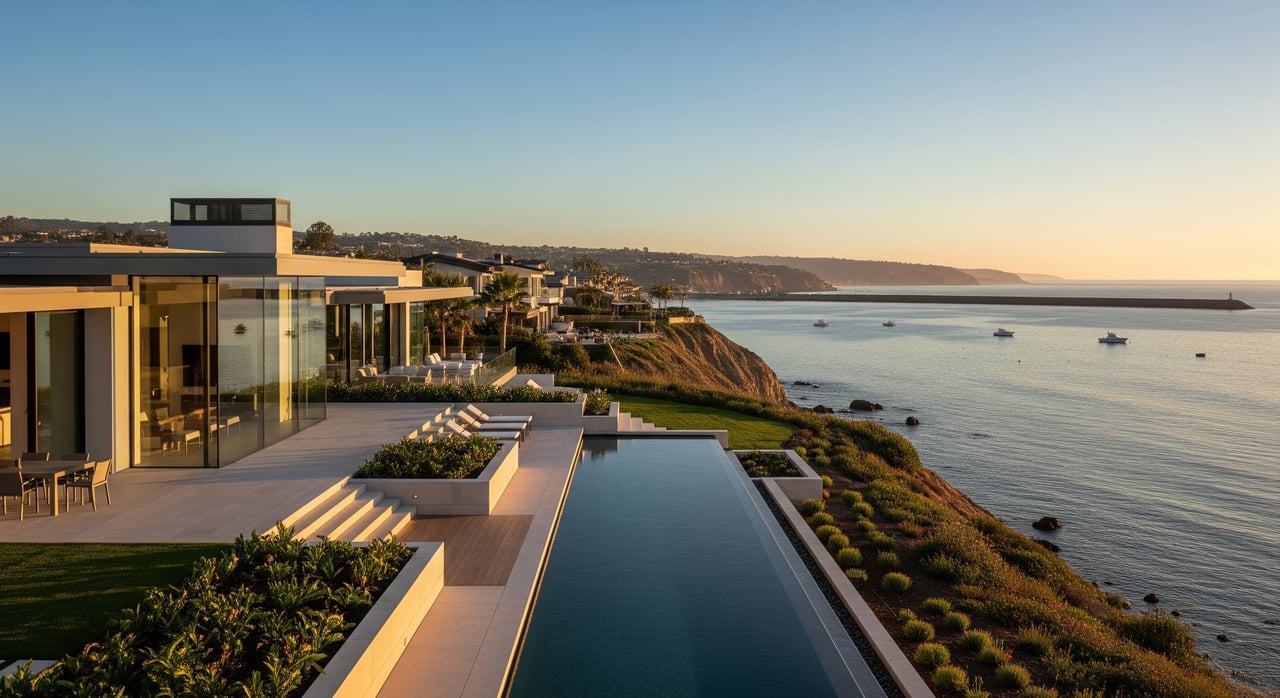
Planning a remodel or addition in Dana Point’s coastal zone? The rules can feel complex, especially when your home sits near bluffs or ocean views. You want a smooth path, clear timelines, and no surprises. This guide gives you the basics on Coastal Development Permits, who reviews them, how the HOA fits in, and smart ways to reduce risk before you invest in full plans. Let’s dive in.
What a CDP is
A Coastal Development Permit, or CDP, is a special approval required for most development within California’s coastal zone. It exists to protect coastal access, scenic resources, and public safety. If your project changes the exterior or the site, you likely need to confirm CDP requirements before you begin building permits.
When you need a CDP
In Dana Point, many projects in the coastal zone trigger a CDP unless an exemption applies. Common triggers include:
- New construction, additions, or enlargements to a home.
- Exterior remodels that change height, footprint, or grading.
- Retaining walls, seawalls, or bluff stabilization.
- Significant grading, fill, or drainage changes.
- New utilities, decks, patios, walkways, and hardscape that could affect coastal resources.
- Changes that affect public views, access, or a view corridor.
Some minor or emergency repairs may be exempt, but exemptions are narrow. Always confirm with the City or the California Coastal Commission before you assume an exemption applies.
Who issues your permit
Dana Point implements a certified Local Coastal Program for many properties, which means the City often issues CDPs when a project meets local coastal policies. The California Coastal Commission keeps original jurisdiction in certain areas, and some local approvals can be appealed to the Commission. To confirm who reviews your project, check your parcel’s location with the City’s Planning Division, ask about LCP status and appeal areas, or verify using the state’s resources.
Step-by-step process
Most homeowners follow a similar path:
Confirm status and HOA rules. Verify your parcel is in the coastal zone and ask who has jurisdiction. Review your HOA CC&Rs and design guidelines.
Pre-application meeting. Meet with Dana Point planning staff to flag permit triggers and likely studies. This early step can save time and cost.
Build your team. Engage an architect or designer, civil or structural engineer, and for bluff sites, a geotechnical engineer. You may also need a landscape designer, biologist, or visual analysis consultant.
Prepare submittals. Typical items include an application form, site survey and topographic plan, floor plans and elevations, grading and drainage plans, a project narrative addressing coastal policies, photos and visual simulations, and required technical reports.
City intake. The City checks for completeness and may request revisions or more detail.
Environmental review. The City determines if the project is exempt under CEQA or if studies and a formal document are needed.
Notice and decision. Some CDPs are administrative. Others require a public hearing before the Planning Commission or City Council. Public notice and neighbor notice apply.
Appeals. Certain approvals may be appealable to the California Coastal Commission within a fixed window.
Building permits and follow-through. After the CDP is final and conditions are met, you can apply for building permits. HOAs may need to confirm design approval before permits are issued.
Typical timelines
Each project is unique, but these ranges are common:
- Pre-application meeting: roughly 1 to 4 weeks to schedule.
- Design and studies: about 1 to 4 months or more, depending on complexity.
- City intake and completeness: about 2 to 6 weeks, longer if revisions are needed.
- CEQA review: 0 to 4 weeks for simple exemptions; longer if a Negative Declaration, Mitigated Negative Declaration, or EIR is required.
- Public notice and decision: about 4 to 12 weeks, depending on hearing schedules and revisions.
- Appeals: if applicable, add 2 to 6 months or more for Commission hearing timelines.
For a typical residential remodel that needs a CDP but not an EIR or Commission hearing, plan for about 3 to 9 months to reach a final local CDP. Bluff stabilization, seawalls, and major new builds often take longer.
Required studies and conditions
Your site drives your study list. Common requirements include:
- Geotechnical report, especially for bluff-top sites or any grading near bluffs.
- Survey and topographic plan to locate property lines, elevations, and bluff edge.
- Drainage and grading plans showing runoff controls and low-impact development practices.
- Biological review if vegetation, wetlands, or habitat could be affected.
- Visual analysis with photo simulations if public coastal views might change.
- Coastal access narrative if the project touches public access, parking, or lateral access.
- Construction staging plan with erosion control and best management practices.
Expect conditions on bluff setbacks, height and grading limits, stormwater controls, and construction timing to protect resources. Some approvals require recording the CDP on title.
HOA design review explained
Your HOA design approval is separate from your CDP. You often need both before you can receive building permits. Key points:
- HOA rules may be stricter than public rules and still apply.
- A CDP does not override HOA standards, and HOA approval does not replace a CDP.
- Engage your HOA early to align style, materials, fences, and landscaping with coastal policies.
- Many building departments will ask for an HOA letter before issuing permits.
If HOA requirements conflict with CDP conditions, you may need to adjust design or work with the HOA to resolve the issue.
Bluff sites and sea-level rise
On bluff properties, reviewers focus on long-term stability and safety. Geotechnical reports often set minimum setbacks and foundation recommendations. New hard armoring such as seawalls is frequently discouraged and requires strong justification. Reviewers also consider sea-level rise over future planning horizons and how your project will perform over time while maintaining public access and coastal resources.
De-risk your project early
You can reduce surprises and save time by taking a few early steps:
- Confirm jurisdiction and appeal status with the City and the state.
- Schedule a pre-application meeting and request written staff guidance.
- Talk to your HOA architectural committee about likely design constraints.
- For bluff or habitat-adjacent sites, commission a limited geotechnical or biological feasibility memo before full plans.
- Explore design alternatives that limit grading, preserve views, and maintain access.
- Budget for studies and plan for public notice and possible appeals in your schedule.
Quick homeowner checklist
- Check coastal zone status and who has permit authority.
- Book a pre-application meeting with City planning staff.
- Start HOA design review and gather their checklist.
- Order early feasibility memos for bluff or sensitive sites.
- Assemble plans and technical reports per City checklist.
- Submit your CDP, respond to completeness comments quickly.
- After CDP approval, secure final HOA approval and then building permits.
Simple examples
Interior remodel inland from the bluff. If there is no change to exterior footprint, grading, or site improvements, a CDP often is not required. Still confirm with the City.
Small addition near a bluff edge. Likely requires a CDP, a geotechnical report, drainage plans, and HOA review. Expect public notice and conditions on setbacks and construction methods.
Who to contact
- City of Dana Point Planning Division for coastal procedures, checklists, and pre-application scheduling.
- California Coastal Commission for LCP status, appeal areas, and statewide guidance.
- Your HOA architectural committee for submittal timelines and design standards.
- Experienced geotechnical and coastal consultants for feasibility and required reports.
If you are planning to buy or sell a coastal property in Dana Point, timing your transaction around permits and approvals can matter. For private guidance tailored to your goals, connect with Chris Sirianni.
FAQs
Do interior remodels need a Dana Point CDP?
- If there is no change to exterior footprint, grading, or site improvements, an interior-only remodel often does not need a CDP. Confirm with the City to be sure.
Who issues my CDP in Dana Point?
- The City usually issues CDPs under its certified LCP, but the California Coastal Commission has jurisdiction in some areas and can hear certain appeals. Verify for your parcel.
How long does a typical CDP take?
- Many residential remodels take about 3 to 9 months for a local CDP, assuming no EIR or Commission hearing. Complex or bluff-related work can take longer.
Do I need a geotechnical report for a deck?
- Near bluffs or where grading or structural support is involved, a geotechnical evaluation is usually required. For flat inland lots, minor non-structural work may not need one.
Which comes first, HOA or CDP?
- You need both approvals. Engage the HOA early for feedback, then align your CDP submittal to avoid conflicting conditions.
How long is the appeal window to the Commission?
- There is a fixed appeal window for certain local approvals. Exact timing and eligibility depend on your project and location, so confirm with City planning staff and the Commission.